From Darning to Patching: How Visible Mending Changed Its Meaning
Visible mending history shows how repairs can serve practical needs and express personal choice, helping you decide whether a mend should blend in or stand out.
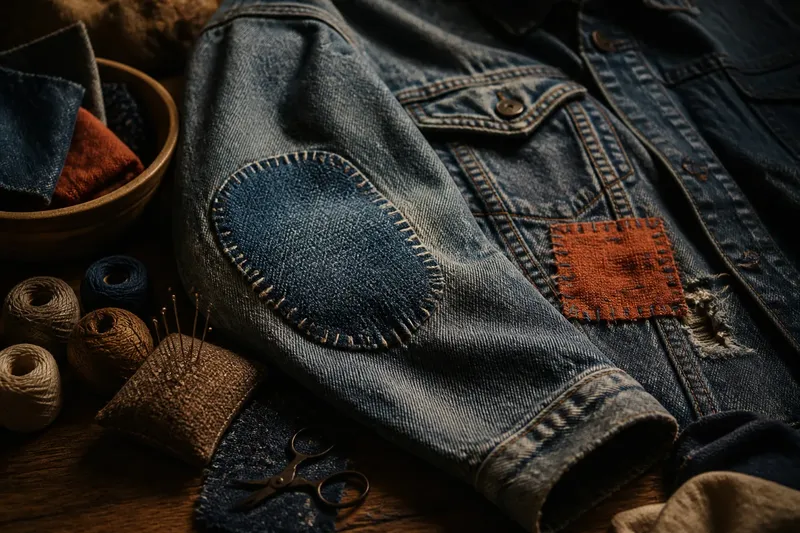
A darned sock can be made to wear again without drawing the eye; a bright patch on a jacket can make the repair part of its design. Visible mending history is not a simple progression from hidden stitches to fashionable colour. It is better understood through the different purposes repairs have served, and the choices people make about showing them.
Why did many repairs aim to blend in?
Clothing takes time and materials to make, so repairing a worn garment has long been a practical way to keep using it. When an intact appearance mattered, menders could choose matching thread, small stitches or a patch close to the original cloth. The aim was often to restore wearability while leaving the garment’s familiar look largely unchanged.
Darning illustrates that approach. On a knitted sock, a mender can weave thread across a thin area, following the fabric’s structure to reinforce it. The work may be visible up close, but it need not become the first thing someone notices. Its value lies in supporting the cloth and returning the sock to use.
That preference was never universal. Clothing customs, available materials and personal circumstances differ, and repairs have also been decorative or conspicuous. It is safer to describe discreet mending as one common response to particular needs than as a rule that applied everywhere.
How did visible mending gain a design meaning?
A visible repair makes the interruption part of the garment’s surface rather than trying to hide it. A contrasting patch can frame a worn elbow; coloured stitches can trace a tear. Both still reinforce fabric, but the mender also makes a design choice.
There is no single turning point that explains this shift. In some settings, replacing clothes became easier to consider; in others, concerns about waste and the wish to keep a valued garment in use made repair newly compelling. Craft books, workshops and online sharing also gave people ways to see and adapt one another’s visible repairs. These are strands of a broad account, not a claim that every community followed the same path.
The change is less about visible mending replacing discreet repair than about more ways to describe and display a mend. Someone may choose contrast for pleasure, to make a patch easier to see, or because matching cloth is unavailable. Someone else may prefer a repair that recedes. Colour alone cannot tell you why a person made that choice.
What is the difference between darning and patching?
Darning uses thread to reinforce or rebuild an area of cloth, often by working across the damaged section. Patching adds a separate piece of fabric over or behind a weak spot. Either method can be subtle or conspicuous; the choice depends on the damage, the material and the look the wearer wants.
- Choose discreet darning if the damaged area is a small thin patch in a knit and the wearer wants the sock or jumper to keep its familiar appearance; if the knit is badly torn or the yarn cannot support the repair, then use a suitable patch or seek help from a mender instead.
- Choose a matching patch if the fabric needs support and the wearer wants the repair to blend with the garment; if the available cloth is a poor match or creates an uncomfortable edge, then try a different patch placement or a more visible repair.
- Choose a contrasting patch if the wearer wants the mend to register as a design detail; if the garment is worn in a setting where that detail would feel unwelcome, then use a quieter colour or ask the wearer before proceeding.
- Choose visible stitching if a tear needs securing and the wearer likes the line of stitches as part of the surface; if the fabric is delicate or the stitches pull it out of shape, then use a less demanding method or consult a skilled repairer.
- Check comfort at the repair site by considering where seams and patches will touch the body; if the edge may rub, then place the patch on the other side of the cloth or choose a softer material.
- Check the garment’s care instructions before selecting thread or patch fabric; if the proposed materials need care the garment cannot tolerate, then choose compatible materials or ask a professional cleaner or repairer for advice.
Say you have inherited a denim jacket with a thinning elbow and a small tear near a pocket, and the wearer wants to keep using it at casual gatherings. You have a close-coloured denim scrap, a brighter cotton scrap and matching or contrasting thread. First, you check that the wearer is comfortable with a visible repair and that either scrap feels suitable against the jacket. Next, you place the close-coloured scrap behind the elbow and the bright one over the pocket tear, then ask how each looks and feels in those positions. If the wearer wants the jacket to look quieter, you use the close-coloured scrap for both repairs; if they like the pocket patch but not the elbow patch, you combine the two choices. The resulting plan reflects the wearer’s preference rather than treating one style as the right answer.
What do people ask about visible mending?
Is visible mending a new practice?
No. People have repaired clothing in ways that remain visible, though methods and meanings vary by place and circumstance. The more recent emphasis is on presenting conspicuous repair as an intentional design choice.
Does visible mending always use bright colours?
No. A repair may show through its texture, outline or placement even when its materials are close in colour to the original cloth. Visibility does not require a particular palette.
Can a garment combine discreet and visible repairs?
Yes. A quiet darn at a sock’s heel and a contrasting patch on a jacket sleeve can meet different needs. There is no requirement to make every repair on a garment look alike.
How can I choose between a patch and a darn?
Consider the fabric and the shape of the damage: darning reinforces cloth with thread, while patching adds another piece of material. Then consider comfort and the wearer’s preference, since either method can be made to blend in or stand out.
How should you decide whether a mend should show?
Start with what the garment needs to do and what the wearer wants to see. A visible repair can be satisfying, but no one owes an audience a display of their mending. A discreet repair can express care just as clearly to the person who wears it.
Before stitching, consider the fabric’s condition, the repair’s position and the garment’s usual setting. If you are mending for someone else, ask whether they prefer a close match, a quiet contrast or a clear design feature. If the cloth is fragile or the damage is complex, a professional repairer can advise on a method that suits it.
Visible mending history leaves room for practical need, craft and personal choice without assigning one meaning to every stitch. Once the garment is repaired, check how it feels and looks in the places it will actually be worn. That final check can reveal a rough edge or an unwanted contrast while there is still time to change the plan.